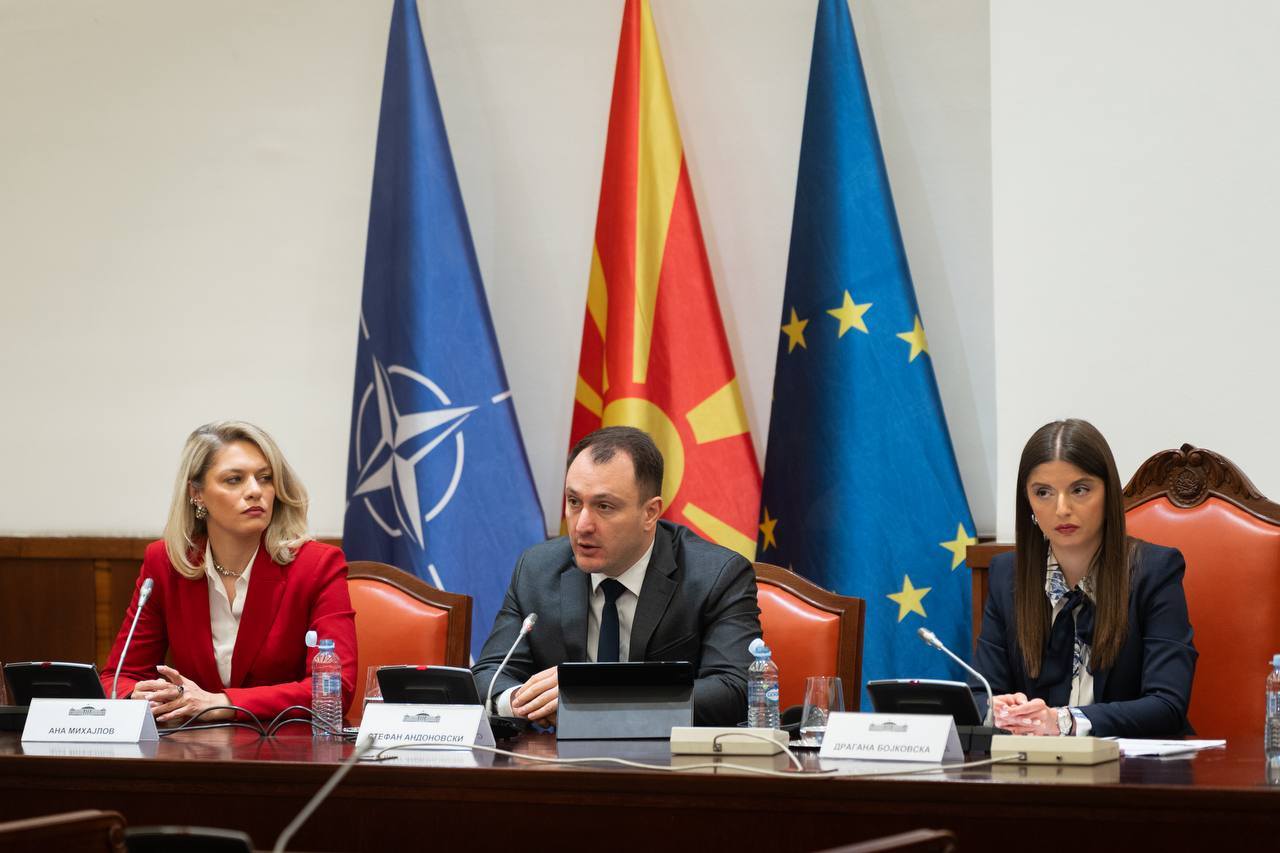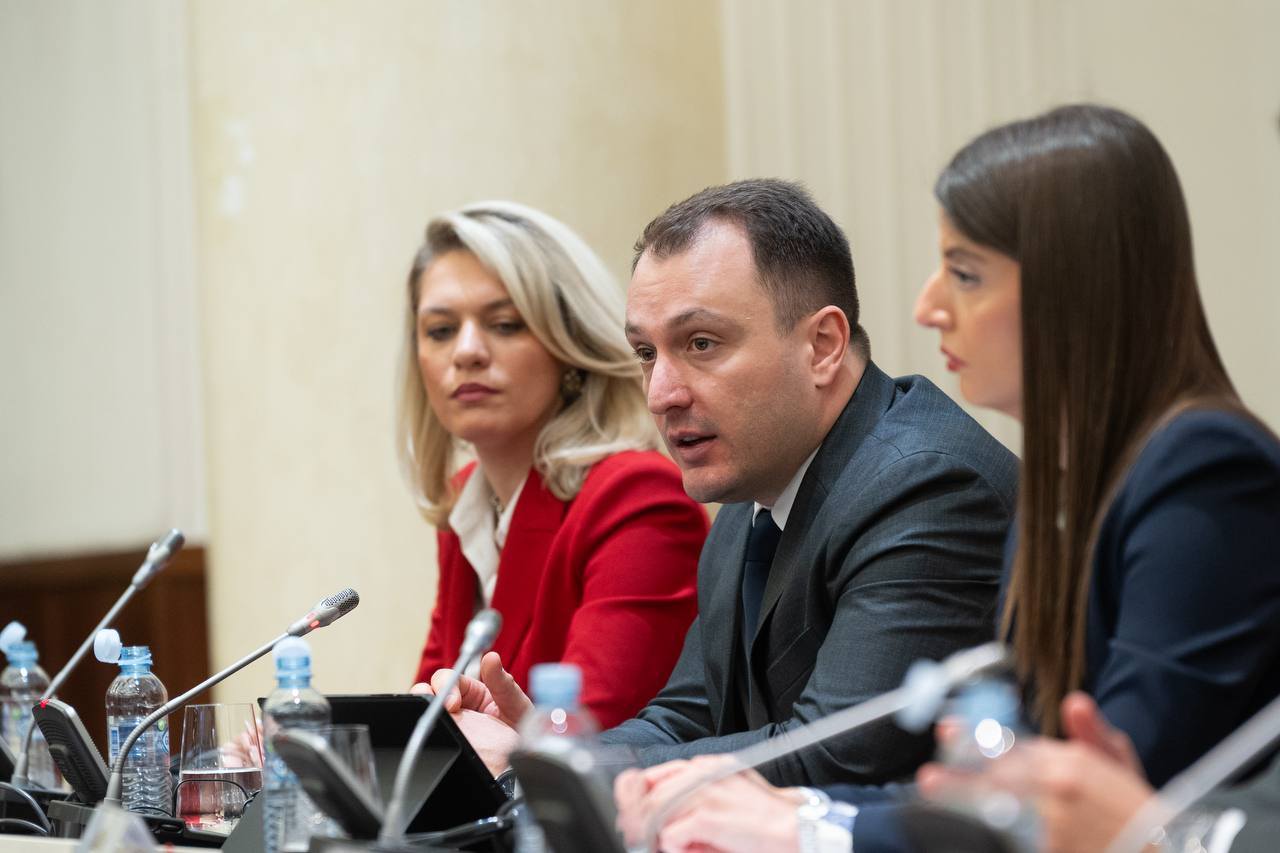

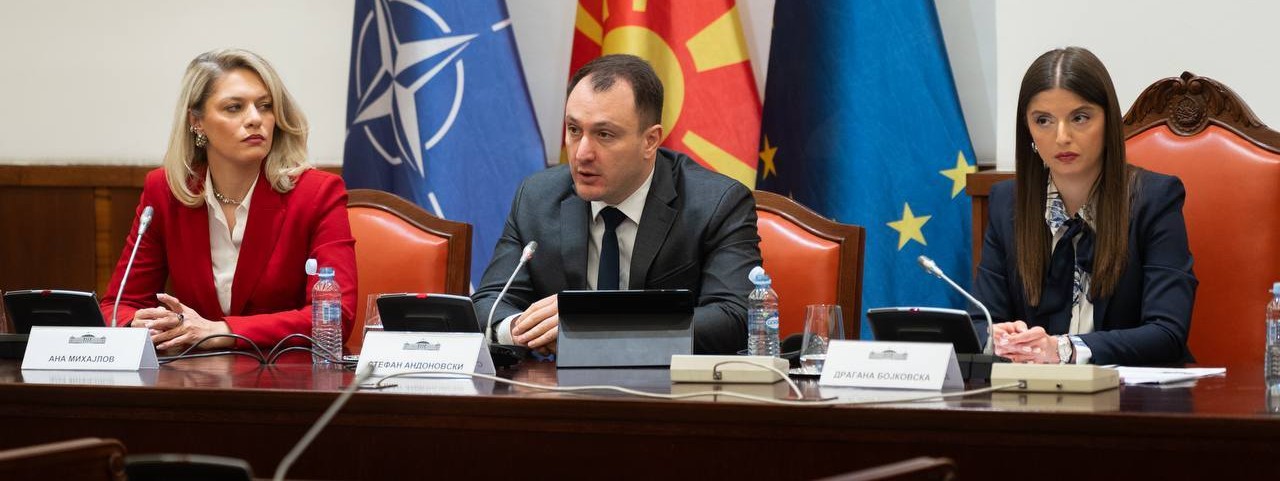
The safety of children in the digital space requires a clear, systemic and responsible approach, urged Minister Andonovski, emphasizing that the solution cannot be seen only in a ban on the use of social networks, but also through the education of young people in the digital world.
"Today we are discussing one of the most important issues for our society - the safety of children in the digital space. This is not a topic that can be solved with isolated activities, but requires a systemic approach, clear rules and accountability from all parties involved," emphasised Minister Andonovskii.
He pointed out that through the Centre for a Safer Internet - MKSafeNet, a structured approach to the safety of young people in the online space is already being built, this centre represents a support system for children, parents, teachers and schools.
Within the framework of the Centre for Safer Internet, several specific tools and resources have been developed, including a guide for parental control, a guide to e-safety in schools, educational materials for teachers, as well as practical instructions for using parental control solutions and security settings.
“MKSafeNet is a significant step forward. Through this initiative, we provide practical resources for parents, teachers and schools, while also laying the groundwork for a long-term system for the digital safety of children," emphasised Andonovski.
The minister added that work is also underway on training for teachers and parents, resources adapted to the age of children, advisory support mechanisms, as well as the establishment of a national centre for safe internet.
According to Minister, education is necessary, but it must be complemented by clear rules in schools, particularly regarding the use of mobile phones during lessons.
"Experience shows that education alone is not enough. It must be supplemented with clear, unified and enforceable rules in schools. The goal is not prohibition for the sake of a ban, but rather the creation of conditions for focus, order and protection of students," stated the minister.
In his address, the issue of video surveillance in schools was also raised as a potential security mechanism, where the minister emphasised that any such solution must be carefully designed and fully compliant with data protection regulations.
"If the introduction of video surveillance is being considered, it must be strictly regulated, limited to common areas, without recording in classrooms and fully compliant with European privacy standards. The focus must be prevention and safety, not violation of privacy," said Andonovski.
The minister emphasised that a combined approach is crucial, one that will unite education, clear rules for the use of technology, and carefully designed security mechanisms.
"Our goal is clear: schools in which children will learn, develop and feel safe — both in the digital and physical space. This debate should result in concrete measures that will bring greater protection for students and greater security for parents," concluded Minister Andonovski.