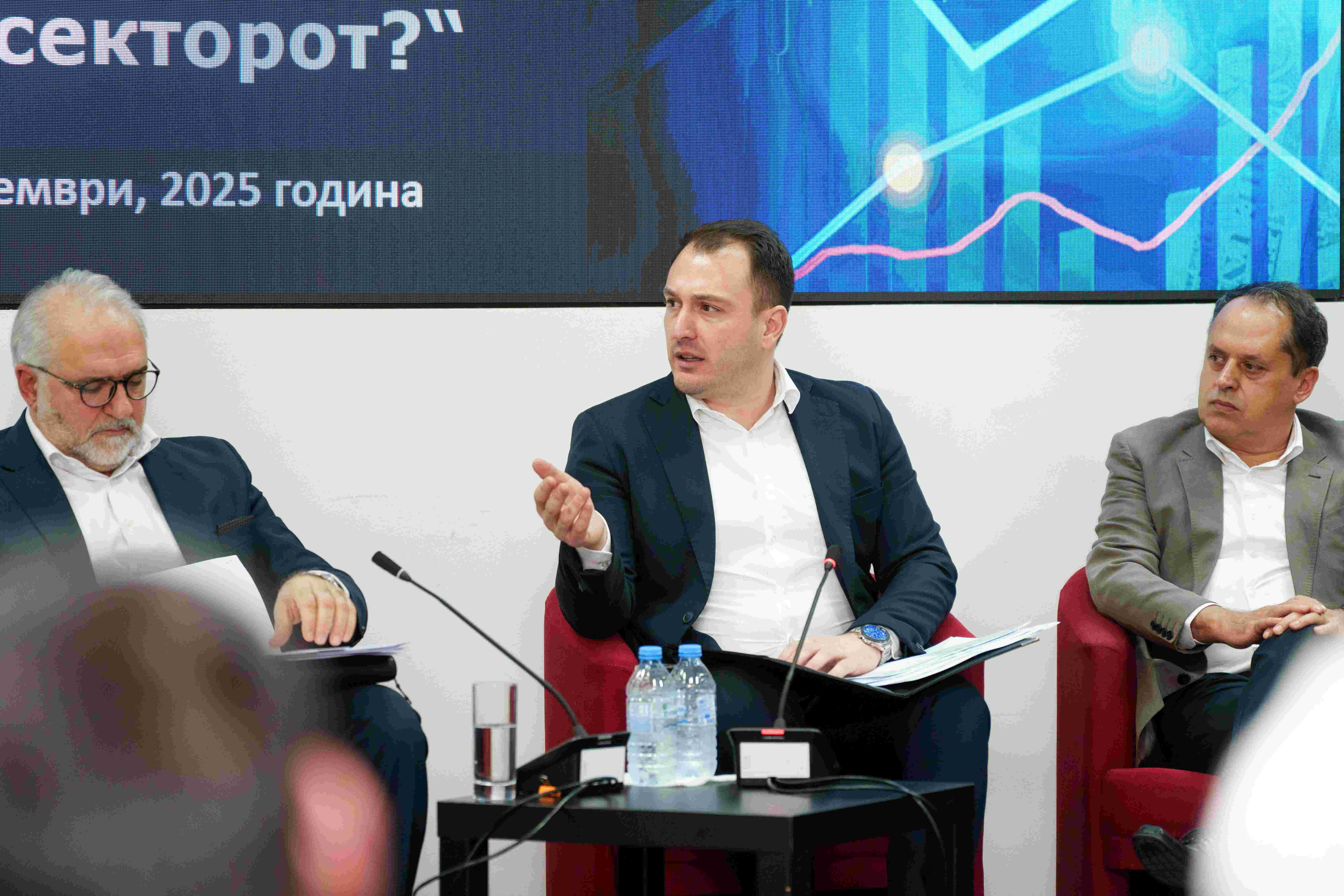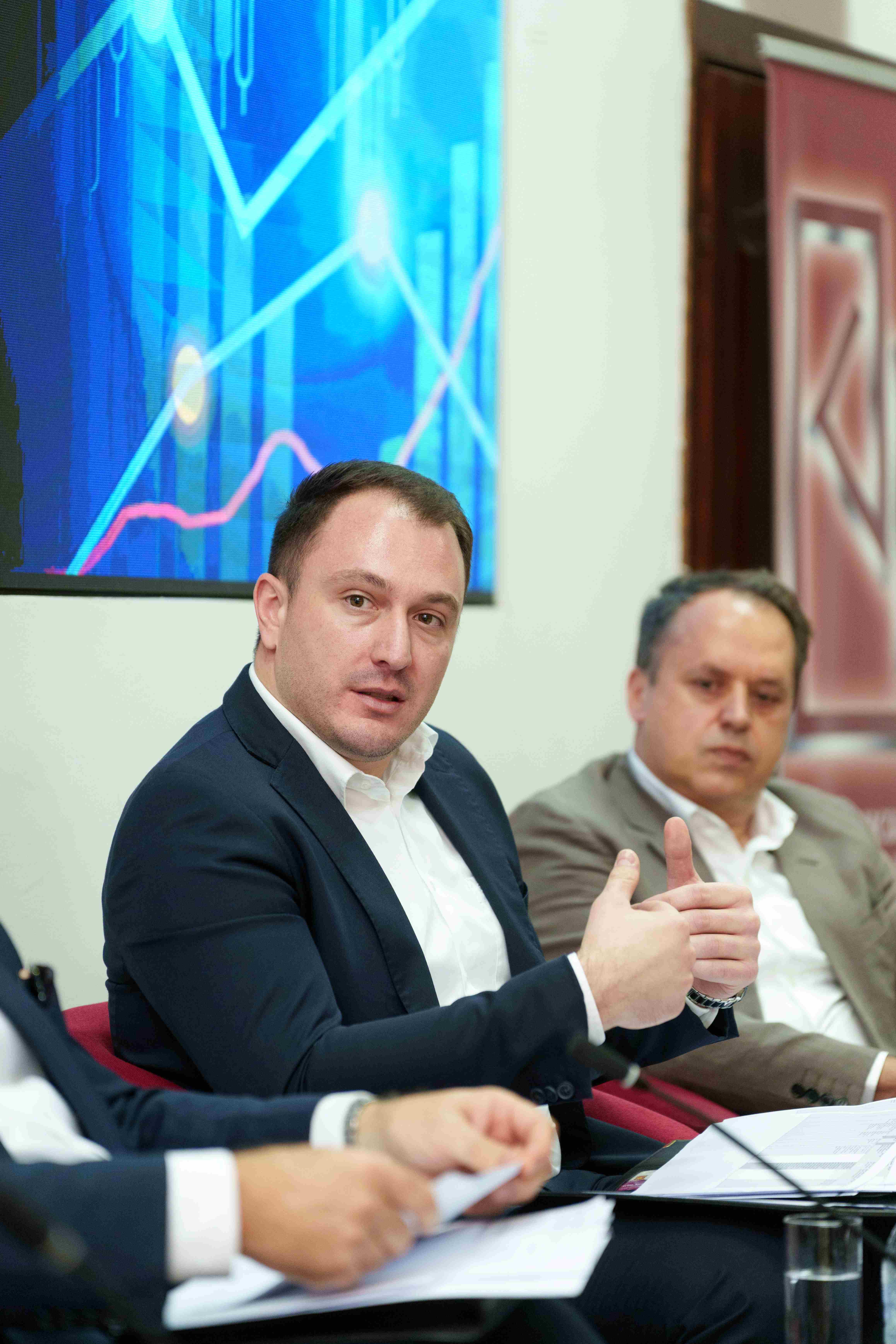

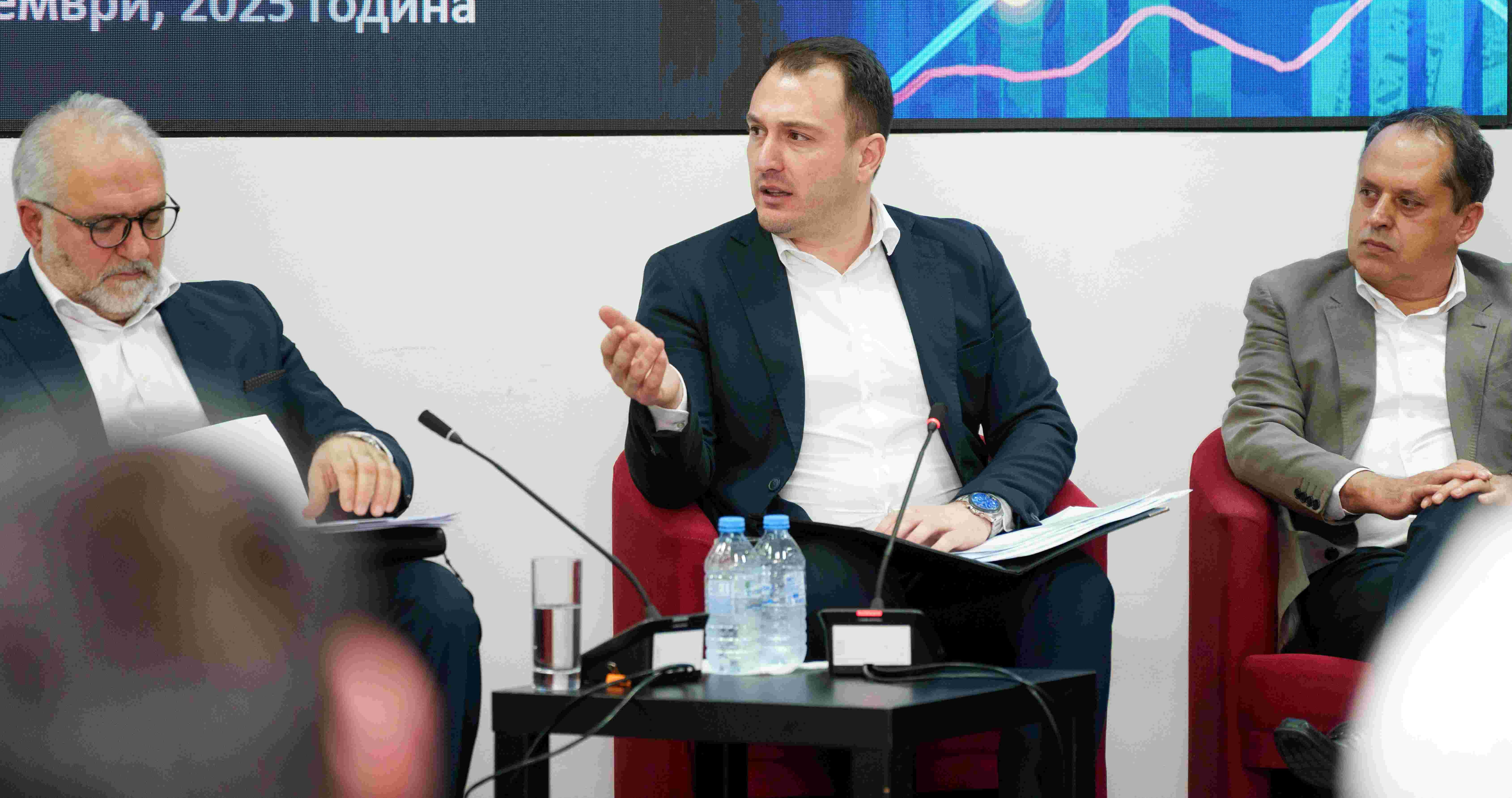
At today's panel discussion at the Chamber of Commerce on the topic "The Growth Plan for the Western Balkans and the National Reform Agenda - why are they important for the business sector?", the Ministry of Digital Transformation was highlighted as an institution leading the implementation of the key reform steps noted on European State Progress Report for this year.
In his address, the Minister of Digital Transformation, Stefan Andonovski, emphasized that it is specifically the digital reforms that contributed to Macedonia fulfilling its obligations in the first package of the Reform Agenda.
Andonovski emphasized the assessment by the European Commission, according to which the country has achieved "visible and measurable progress in cyber-security, digital services and interoperability", and the Ministry of Digital Transformation is recognized as an institution that "provides a stable basis for the rapid and coordinated implementation of European standards".
He reminded that in the past year the Ministry implemented the reforms that were a prerequisite for opening a new financial space from the Growth Plan, including:
The Law on Security of Networks and Information Systems, aligned with NIS2;
The Law on Electronic Archives, the Law on Electronic Identification and Improvements to the National Interoperability Platform;
New digital services through the uslugi.gov.mk portal.
The minister pointed out that these results are not administrative steps, but concrete improvements that reduce the administrative burden for companies, shorten procedures and create a higher level of predictability in the business environment.
"Our goal is to create a digital state that allows companies to work more efficiently, with lower costs and conditions approaching the European single market," said Andonovski.
The minister pointed out that the Western Balkans Growth Plan brings opportunities for deeper economic integration, and the digital component is one of the key elements.
The Ministry is already working on:
Enhanced interoperability;
Integration into regional digital infrastructures and supercomputer capacities;
Support of SMEs through the European Digital Innovation Hub INNOFEIT EDIH;
Development of the National Centre for Artificial Intelligence "Vezilka".
The event was organized by the Chamber of Commerce, and representatives from the business sector, the civil society sector, the Ministry of European Affairs and the Ministry of Digital Transformation participated in the panel.