
The Ministry of Digital Transformation officially launched the mobile application "m.Uslugi" today, providing a new mobile access to digital public services and electronic documents for citizens.
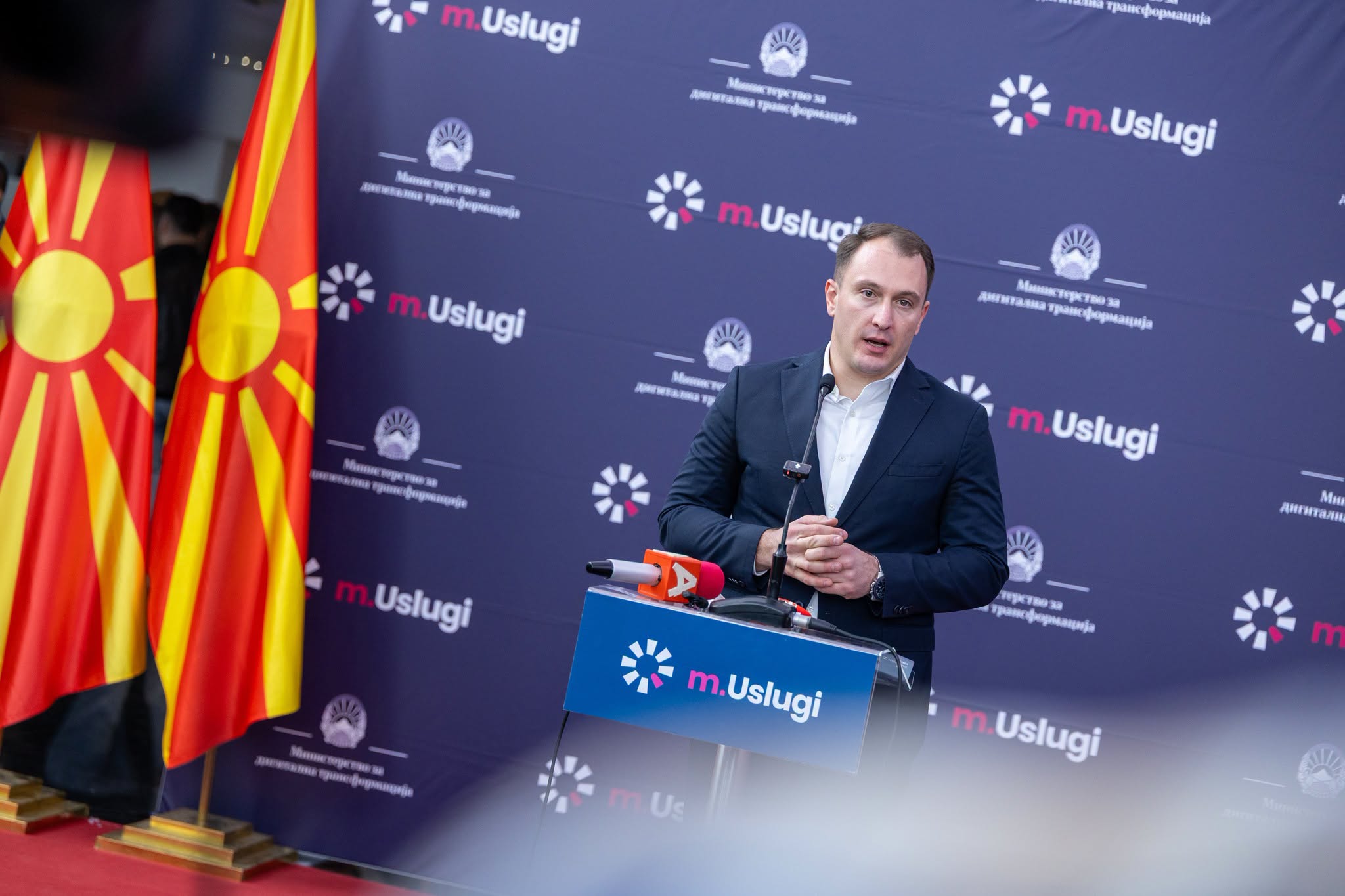
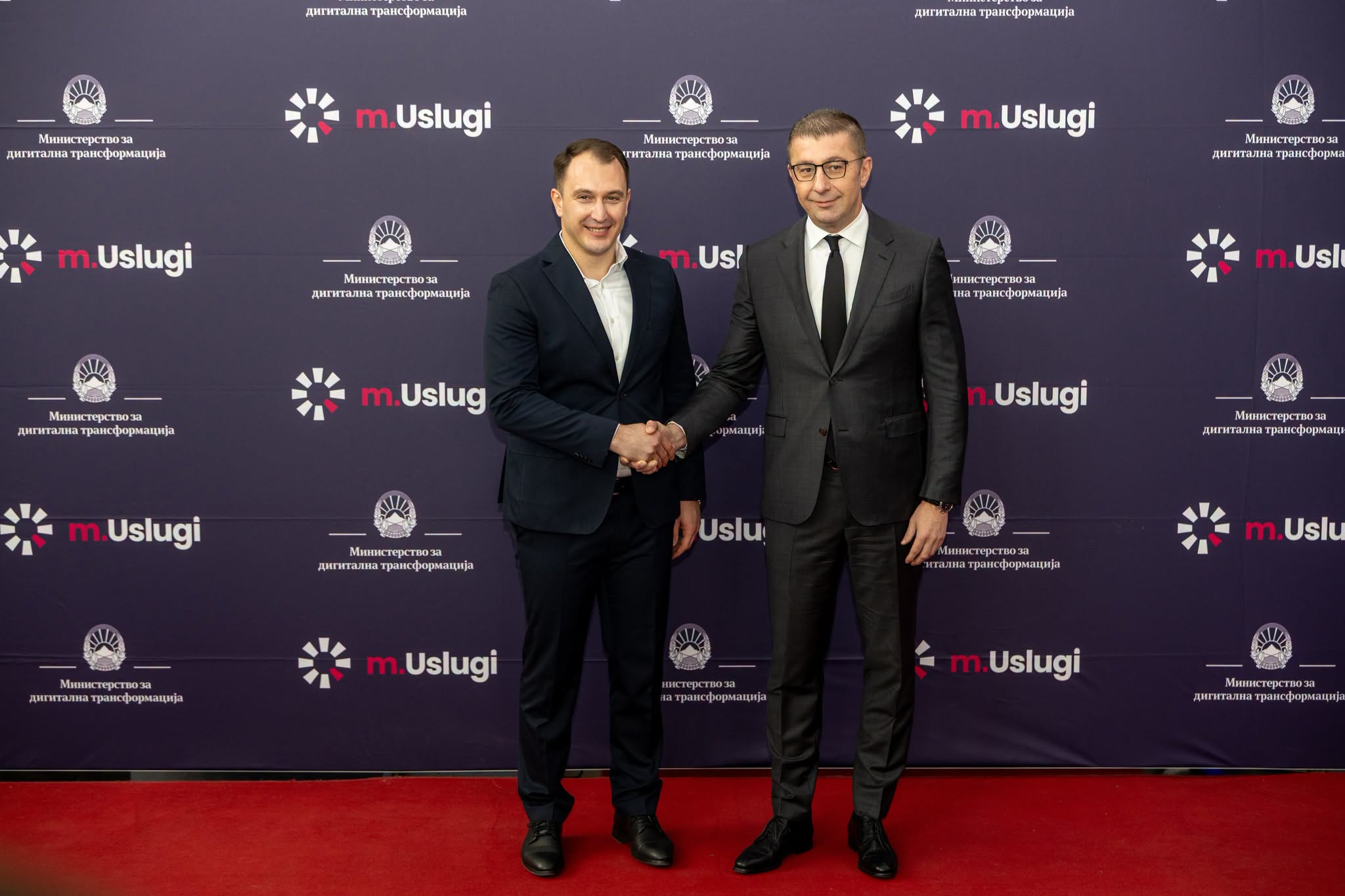
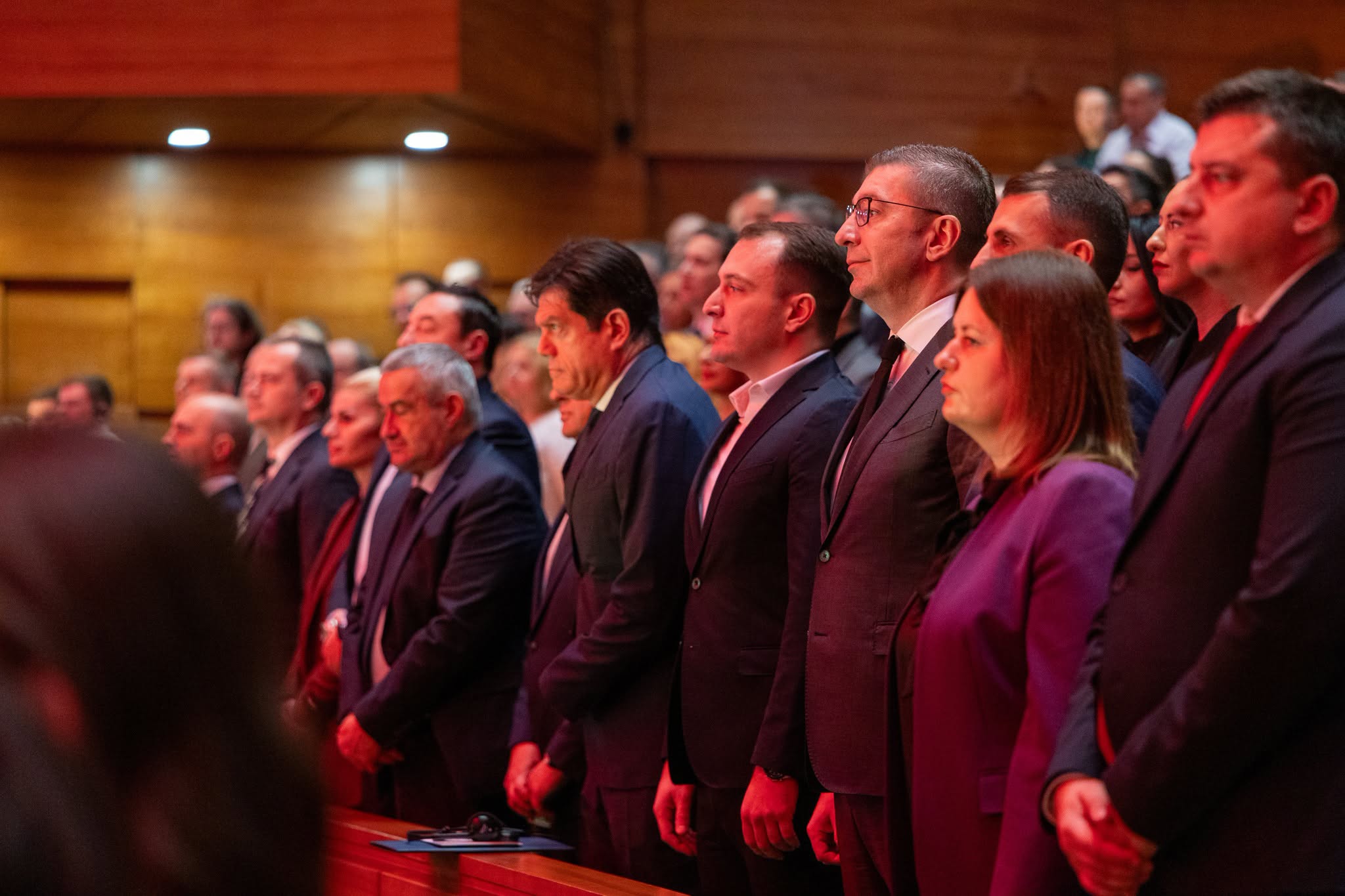
At an event held at the Macedonian Philharmonic—in the presence of the Prime Minister Hristijan Mickoski, representatives from institutions, the European Union, the diplomatic corps, the academic and business communities, and the media, Minister of Digital Transformation Stefan Andonovski presented the application and provided a live demonstration of its initial features.
"When we began the digital transformation process, the goal was not simply to create more applications, portals, or registries. The question was much simpler: how to make the state more accessible to its citizens. For far too long, the state has been a counter for many people, with working hours, missing documents, and information that the state already possesses but still requires the citizen to provide. With m.Uslugi, we are starting to change that very relationship," emphasised Andonovski.
The Minister noted that the vision for m.Uslugi originated in 2024, following his participation in the Diia Summit in Zurich, where he was introduced to the Ukrainian "Diia" model. The concept was subsequently developed as part of the European project GovTech4All, under the Digital Europe programme.
m.Uslugi is envisioned as a single mobile gateway to the digital state—featuring a digital identity, electronic documents, public services, and notifications in one place, with integrated payments to be added in future phases. The m.Uslugi application is free of charge, and its use is entirely voluntary. It serves as an additional, faster, and simpler channel for accessing public services and electronic documents, without replacing other existing ways for citizens to interact with institutions. The aim is to ensure that any citizen wishing to take advantage of digital services can do so easily and at no extra cost.
During the presentation, Andonovski activated the application live and added his electronic ID card to the digital wallet.
"This is not a photograph of an ID card, nor is it a PDF document. It is an electronic version of the document stored on a mobile phone," pointed out the Minister.
One of the functionalities that was demonstrated is the ability to selectively share data. Instead of the user having to show the entire document when they only need to confirm their age, the application allows for the sharing of just the necessary information.
"If the only question is whether a person is of legal age, there is no need to share their address, document number, or any other personal data. A modern digital identity means sharing only the specific information that is required," said Andonovski.
In addition to digital documents, through m.Uslugi, citizens also gain mobile access to the first electronic services.
The Minister emphasized that the goal is not merely to shift existing administrative procedures from a service counter to a mobile phone, but to fundamentally simplify them.
"If a procedure currently involves seven unnecessary steps, success does not mean simply creating seven digital steps. We need to determine which steps can be eliminated entirely, identify what data the state already possesses, and establish what information institutions can securely exchange with one another. That is true digitalization," Andonovski pointed out.
He stressed that *m.Uslugi* is a starting point rather than a finished product, and that the application will undergo continuous upgrades.
In the forthcoming phases, the introduction of integrated payments is planned, along with the possibility of using photographs in procedures where necessary, new electronic documents such as extracts, certificates, and diplomas, as well as a significant expansion of the number of available services.
"We will not prioritize digitizing what is easiest for the administration; instead, we will digitize what citizens need the most," stated the Minister.
Andonovski also called on the institutions to actively participate by introducing new services and connecting their systems and urged the media and citizens to test the application, point out any shortcomings, and suggest improvements.
"As of today, the circle of people who will develop m.Uslugi becomes much larger. Institutions should add services and propose enhancements. The media should test it, scrutinise us, and criticise us when something does not work. Citizens should use it, tell us what they find lacking, and help us make it better. And, I hope, they will enjoy it when it saves them time, nerves, and unnecessary trips to institutions," emphasised Andonovski.
He expressed his gratitude to the team at the Ministry of Digital Transformation, the development and partner teams, the institutions involved in system integration, the test users, and the international partners who shared their expertise in the development of digital government services.
Minister Andonovski extended special gratitude to the Ministry of Internal Affairs and Minister Panche Toshkovski for their collaboration and support in connecting the systems and enabling the first electronic documents in m.Uslugi. "This project demonstrates that a digital state can only function when institutions work together, link their registries, and prioritize service to the citizen over institutional boundaries," emphasised Andonovski.
Appreciation was also extended to the European Union, which provided financial support for the project through the Digital Europe program, as well as to Prime Minister Hristijan Mickoski for his support in the project's implementation.
According to Andonovski, the success of m.Uslugi will not be measured solely by the number of applications download, but primarily by the time saved for citizens, the number of unnecessary administrative steps eliminated, and the number of services that can be completed entirely digitally.
"Digital transformation is not successful simply because the administration uses technology. It is successful when citizen feels that the state has become simpler for them. m.Uslugi is not the end of this process. This is the beginning. Starting today, we are changing what citizens should expect from their state—a state that is closer, simpler, and more accessible," stated Minister Andonovski.
m.Uslugi – the state in your phone.