
Macedonia will receive a modern National Data Centre that will consolidate the fragmented state IT infrastructure, provide a higher level of data protection and create a foundation for the development of new digital services and technologies.
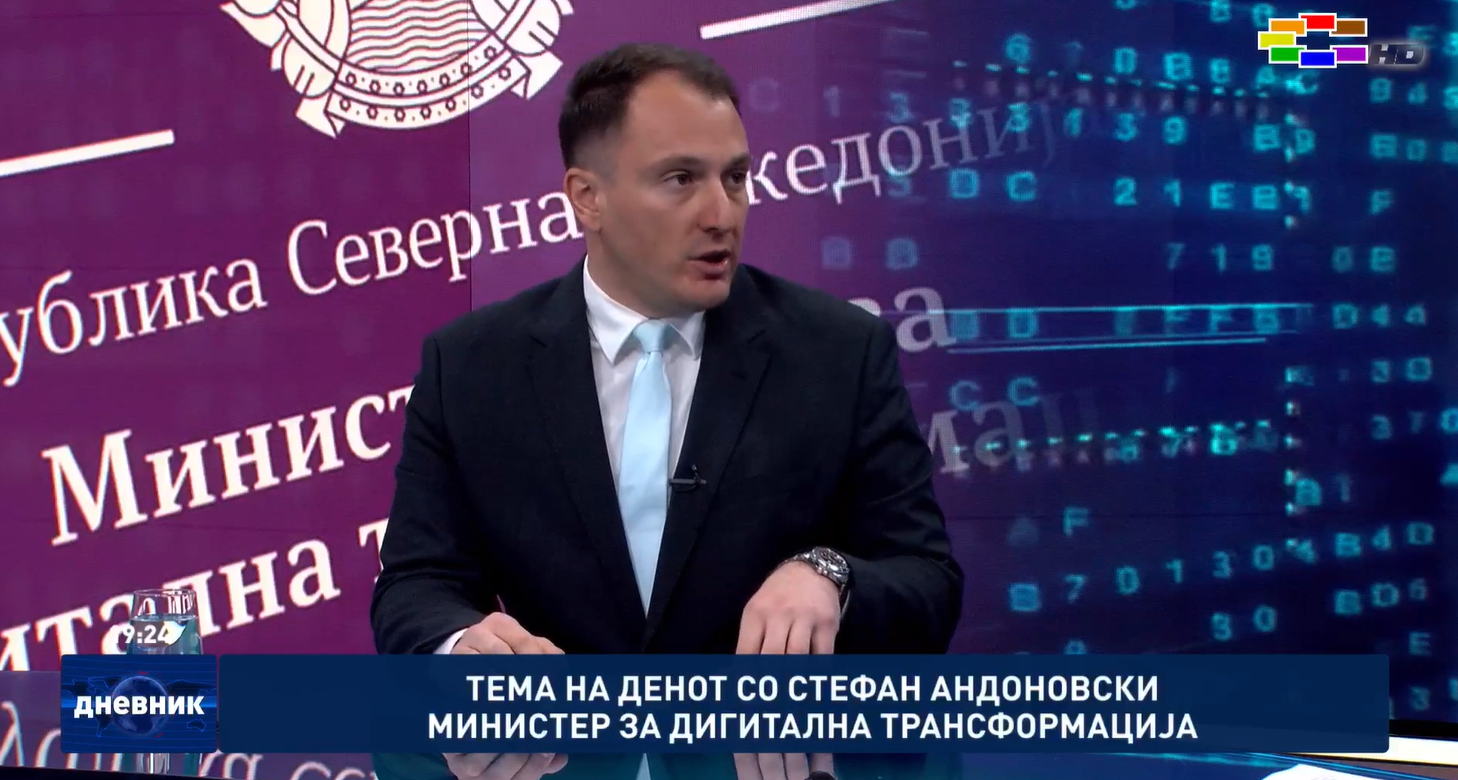
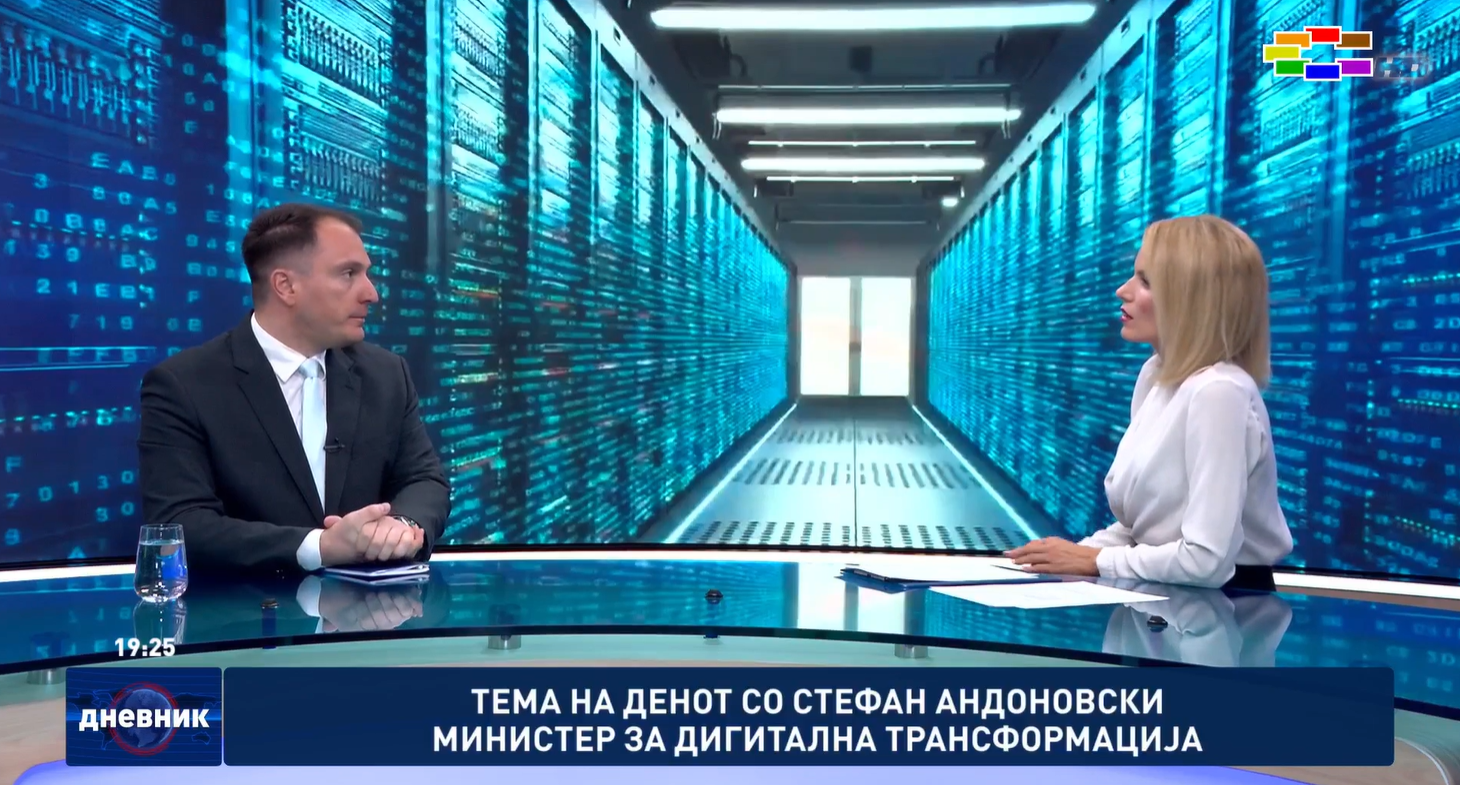
This was highlighted by the Minister of Digital Transformation Stefan Andonovski, during his guest appearance this evening on "Tema na denot" on the central news program of TV Sitel.
According to Andonovski, today the state information systems and equipment are distributed across more than twenty smaller data centres and server locations, which incurs additional costs for equipment, electricity, cooling, uninterruptible power supply, maintenance and security.
"You cannot build a digital state while simultaneously managing dozens of server rooms and equipment scattered across the entire country. To put it plainly, it is like managing 20 small fields fragmented from Ohrid to Kumanovo and from Skopje to Strumica – at each location, you need equipment, people, logistics, and security. The national data centre will allow us to consolidate all of this and establish unified standards," stated Andonovski.
He emphasised that the National Data Centre is an infrastructural project designed to support the next phase of the country's digital transformation – the growth of electronic services, interoperability among institutions, the government cloud, digital identity, and the application of new technologies.
"If we want more services to be fully available online, if we want institutions to automatically exchange data, and if we wish to utilise artificial intelligence and modern cloud technologies, we must have an infrastructure that can securely support all of this. The National Data Centre is the foundation of the digital state for the next two to three decades," said Andonovski.
The first phase of the project is estimated at around 20 million euros, with funds being provided through the Growth Plan and the Reform Agenda. Around 30 percent of the investment is grant funds, while favourable financing with international partners is being considered for the remaining 70 percent.
Andonovski pointed out that the economic justification of the project should be seen in terms of the costs that the state already has for maintaining more than twenty separate systems.
"Today, for each of these locations, we pay separately for electricity, cooling systems, uninterruptible power supply, network and server equipment, physical and cyber security and maintenance. Through consolidation, we achieve economies of scale, better utilisation of equipment, and a much higher and unified standard of security" emphasised the minister.
Regarding energy and environmental aspects, Andonovski stressed that this is a compact state data centre with an installed capacity of under 1 MW, designed for the needs of the public sector.
"It is important to put the scale in its proper context. We are not building a commercial hyperscale data centre of 100 or 150 megawatts. We are talking about a centre with less than 1 megawatt of installed power, which will serve the needs of the state and citizens," Andonovski said.
The project is already the subject of a feasibility study, and in the next phase the final location, environmental report, technical solution and implementation model will be determined. All necessary environmental and technical procedures will be carried out before the start of construction.
It is planned to use modern technologies for energy efficiency and cooling without water consumption, and the technical parameters of the project will be publicly presented before the final decisions are made.
"The goal is not just to build a new facility. The goal is for the state to obtain a secure, efficient and long-term sustainable digital infrastructure on which the services that citizens and companies use every day will function," Andonovski concluded.