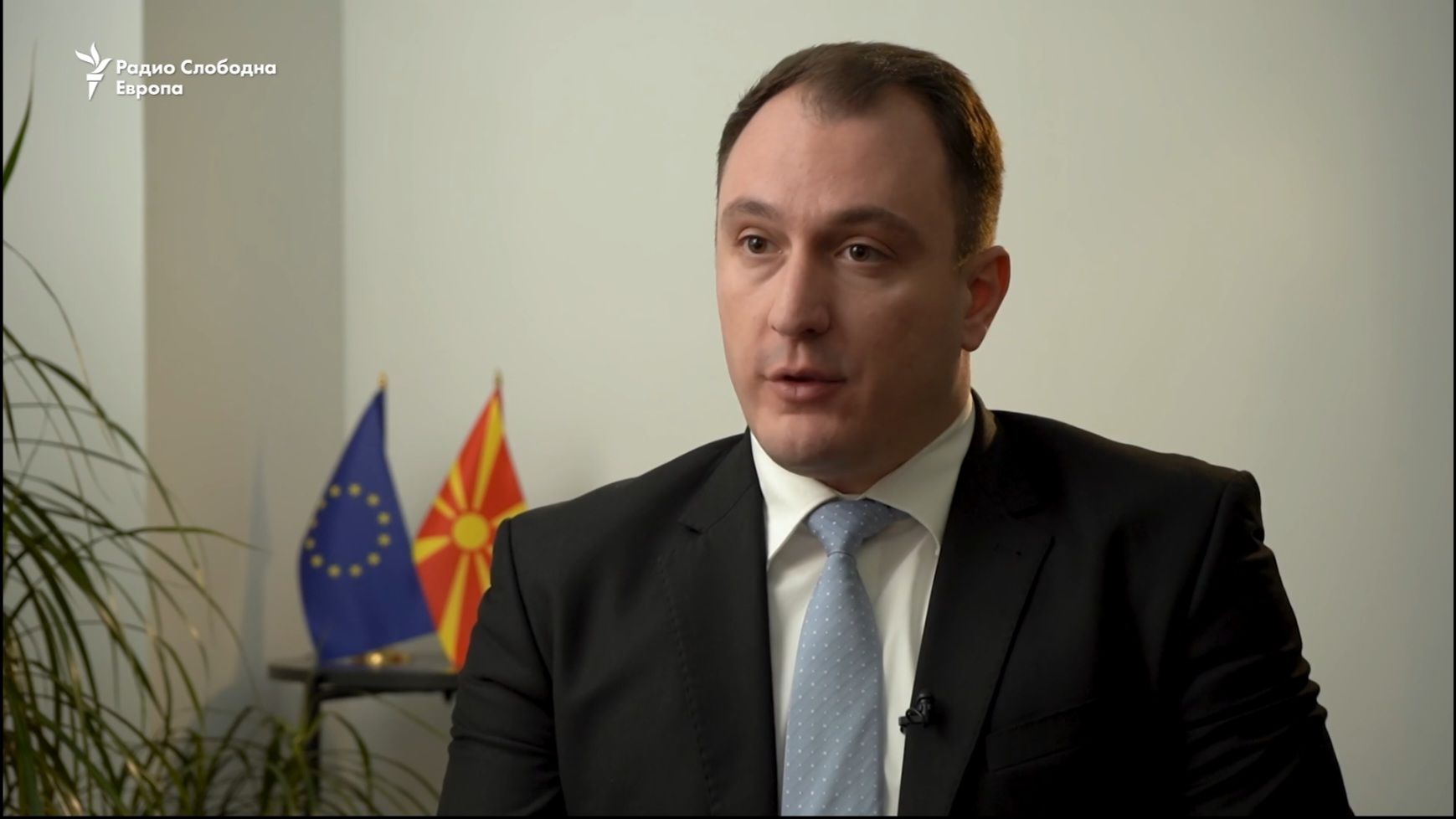

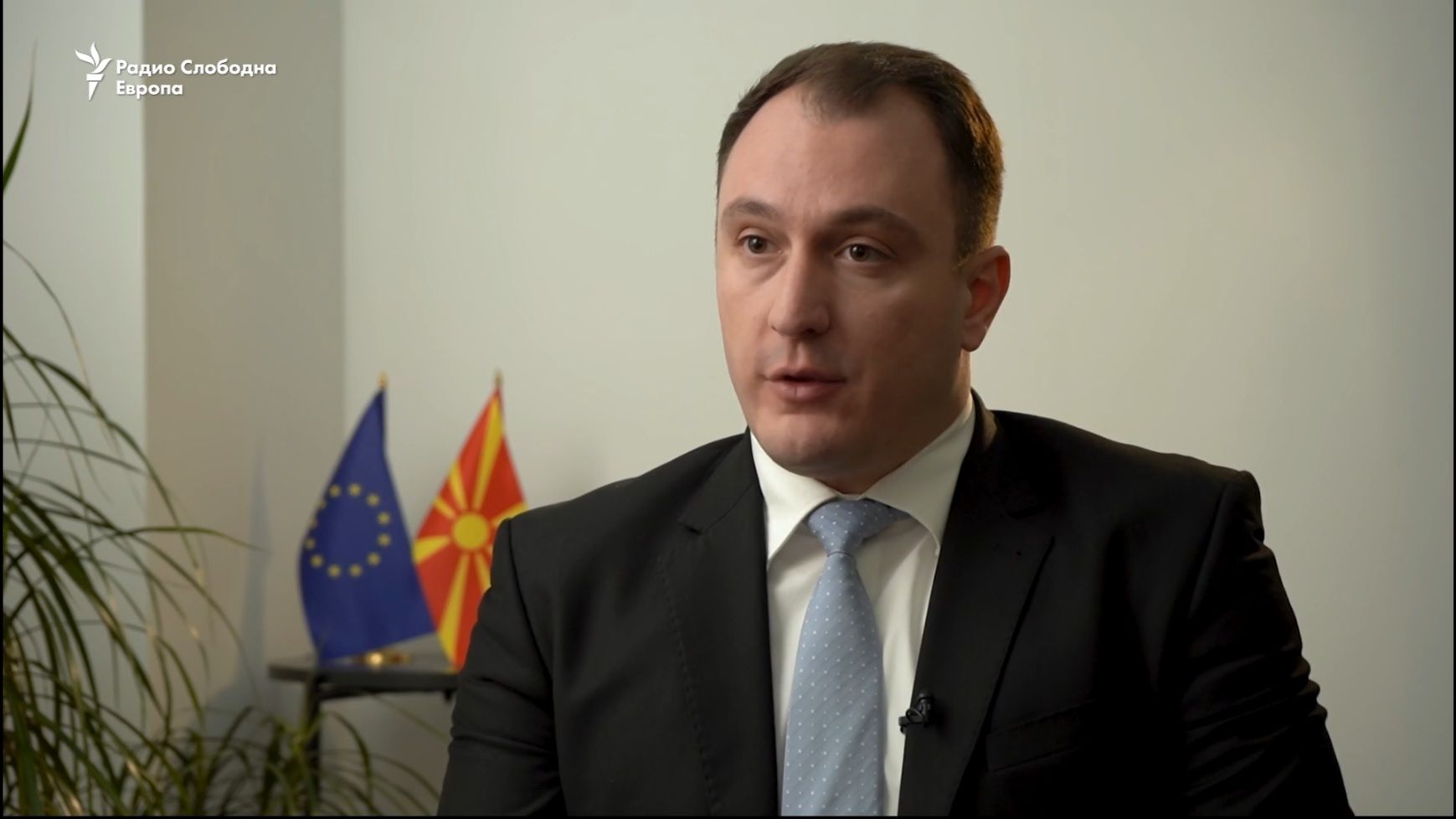
Minister of Digital Transformation, Stefan Andonovski, was a guest in a weekly interview on Radio Free Europe, where he spoke about the specific steps for fully electronic services, the situation in institutions and the implementation of the new cybersecurity law.
Electronic certificates – from “application” to fully electronic obtaining of the final document.
In the interview, Andonovski clarified that the experience so far with some of the services from the Civil Registry Office most likely stems from the fact that citizens were redirected from the national portal to the web portal of the institution itself, as the Civil Registry Office (CRO) has so far independently published the services electronically. “I assume that this is a redirection from the national portal for uslugi.gov.mk to the specific portal of the Civil Registry Office because it has published its services electronically on its own until now,” said Andonovski.
Andonovski announced that the Ministry is in the process of changes and that the four key services of the Civil Registry Office will be integrated into the national portal: “We are in the midst of changes for the four services offered by the Civil Registry Office, the birth, marriage, death and marital status certificates.”
Andonovski informed that the process is in its final phase: “We are already in the testing phase of the services, all of them will soon be transferred to the national service portal.”
The Minister added that for each of these services, citizens will also receive an electronic certificate and will have more options for retrieval: “For each of them, the certificate will be obtained electronically, and you will have the option to choose to receive it at the counter or have it delivered by post.”
Andonovski declared that the state will not go with “forced digitalization” for the entire population, but that the example of fully electronic application for electronic device vouchers for students has proven to be exceptionally successful.
He pointed out: "We do not want to do this for all citizens at once because the state is not sufficiently prepared to offer all services electronically, when the state fulfils its obligation to offer all services in electronic format, then we can demand the same from citizens." The minister noted that attention must also be paid to the digital divide between citizens.
Speaking about the implementation of the Law on Cyber Security, Andonovski explained that the law establishes standards and protocols, as well as mechanisms for reporting incidents.
He emphasized that the law clearly delineates the responsibilities of the two CERTs: "the government CIRT is responsible for the bodies of the state administration," while the national CIRT encompasses entities outside the government administration.
Andonovski added that "the two CIRTs will have a single platform for mutual cooperation." Regarding the failure to report incidents, the minister stated: "misdemeanour provisions are foreseen that start from the responsible person in the entity and go upwards, the goal is to overcome the fear from the past that when incidents in cyberspace were not reported, they were not reported and that cost the state much more."
The minister emphasized that the Ministry of Digital Transformation remains committed to real digitalization, measurable in the field, services that are truly completed electronically, with clear standards and enhanced protection of institutions and citizens in the digital space.