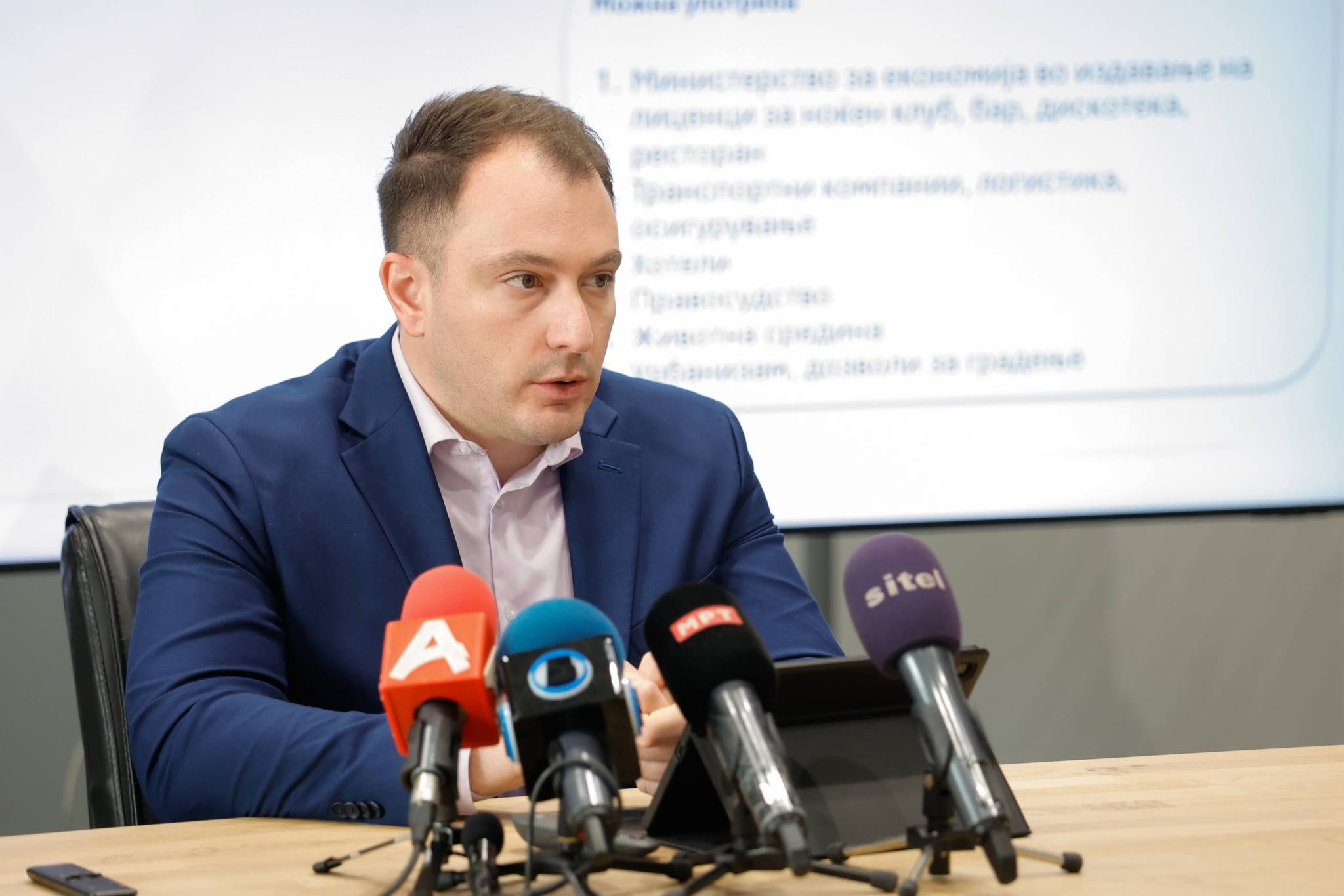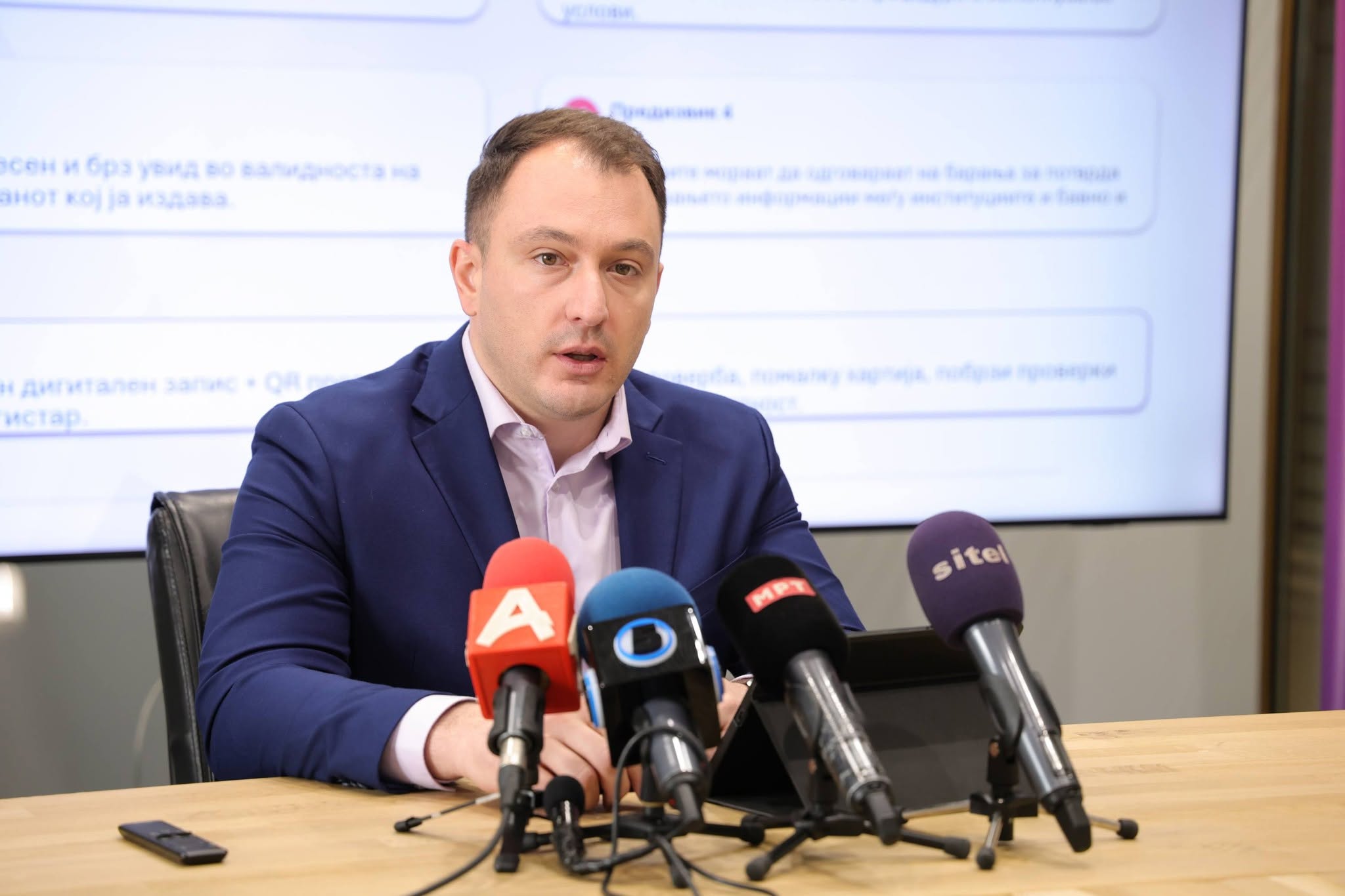

The Minister of Digital Transformation, Stefan Andonovski, today at a briefing with journalists presented the SMART Licenses system, which represents yet another practical step in the digital transformation of public services.
It is about a fully electronic system for issuing, checking and public tracking of licences through an electronic registry and QR code.
As Minister Andonovski emphasized, the goal of this system is for every license issued by an institution to be able to be checked quickly, accurately, officially and without unnecessary administrative obstacles.
"Instead of a document that is carried, photocopied, forwarded and difficult to check, we are introducing a model in which there is single official electronic record, linked to a QR code and an electronic registry that shows the exact current status," pointed out Andonovski.
The SMART license is not just an electronic replacement for a printed document, but part of a new system that includes electronic application, electronic processing, electronic registry, QR verification and verifiable procedure trace. With a single scan, one can verify the official status of the licence – whether it is valid, expired, suspended, revoked, or under process.
The first pilot project has already been implemented in the Ministry of Digital Transformation, for providers of qualified trust services. These are services of particular importance for the digital economy and legal security in electronic operations, such as qualified certificates for electronic signature, electronic seal, website authenticity, electronic time stamps, electronic registered delivery, validation and electronic storage of documents.
The process is fully structured and easy to follow. The legal entity logs in to the National e-Services Portal, selects the type of qualified trust service, fills out an electronic application and uploads the necessary attachments. Some of the data is automatically retrieved, where possible, and some is entered and validated in the process.
After submission, the system returns a unique identifier and archive number for the request, which gives each case clear traceability – from the moment of submission, through processing, to the final response. The subject can track their case through their mailbox on the portal, and the response is received as an electronic document: an approval decision, a rejection decision, or a decision for an incomplete request.
When the license is approved, it appears in the electronic register with the status “valid” and with the option of QR verification. The QR code does not just lead to a copy of the document, but to an official verification of the status in the register. This means that a citizen, company, inspector, or other institution checks the current status at the time of the review, and not an old copy, a sent PDF, or an outdated document.
"This creates greater trust. If the license is valid – it is publicly visible. If it is revoked, expired or suspended – this must also be visible through verification. This protects citizens, protects companies that operate legally, and institutions gain more efficient control," emphasized Minister Andonovski.
With SMART licenses, citizens gain the opportunity to check a license in a few seconds, companies gain greater confidence in legal transactions, reduced subjectivity from the administration and less waiting in administrative procedures, while institutions gain an electronic register available in real time, with less paper, fewer requests for confirmations and better inspection and public control.
Andonovski emphasized that this model should not remain limited to the Ministry of Digital Transformation, but can also be applied in other areas, such as catering, transport, logistics, insurance, hotel management, justice, environment, urban planning and building permits.
“Wherever there is a license, permit or approval that the public should be able to check, there can be a SMART license,” Andonovski said.
The licenses of the Ministry of Economy and Labor, which relate to a nightclub, disco, cabaret, bar and hotel, are also in an advanced stage of development and testing, and testing is expected to be completed by the end of June.
“Our goal is for the state to stop requiring citizens and companies to be couriers of documents. The state must ensure that data is accurate, accessible, verifiable and secure,” stressed Minister Andonovski.
SMART licenses are a concrete example of how digitalization brings real value: less paper, less bureaucracy, more trust, faster verification and greater accountability. The Ministry of Digital Transformation continues to develop public services that are easy to use, legally valid, secure and verifiable at any time.