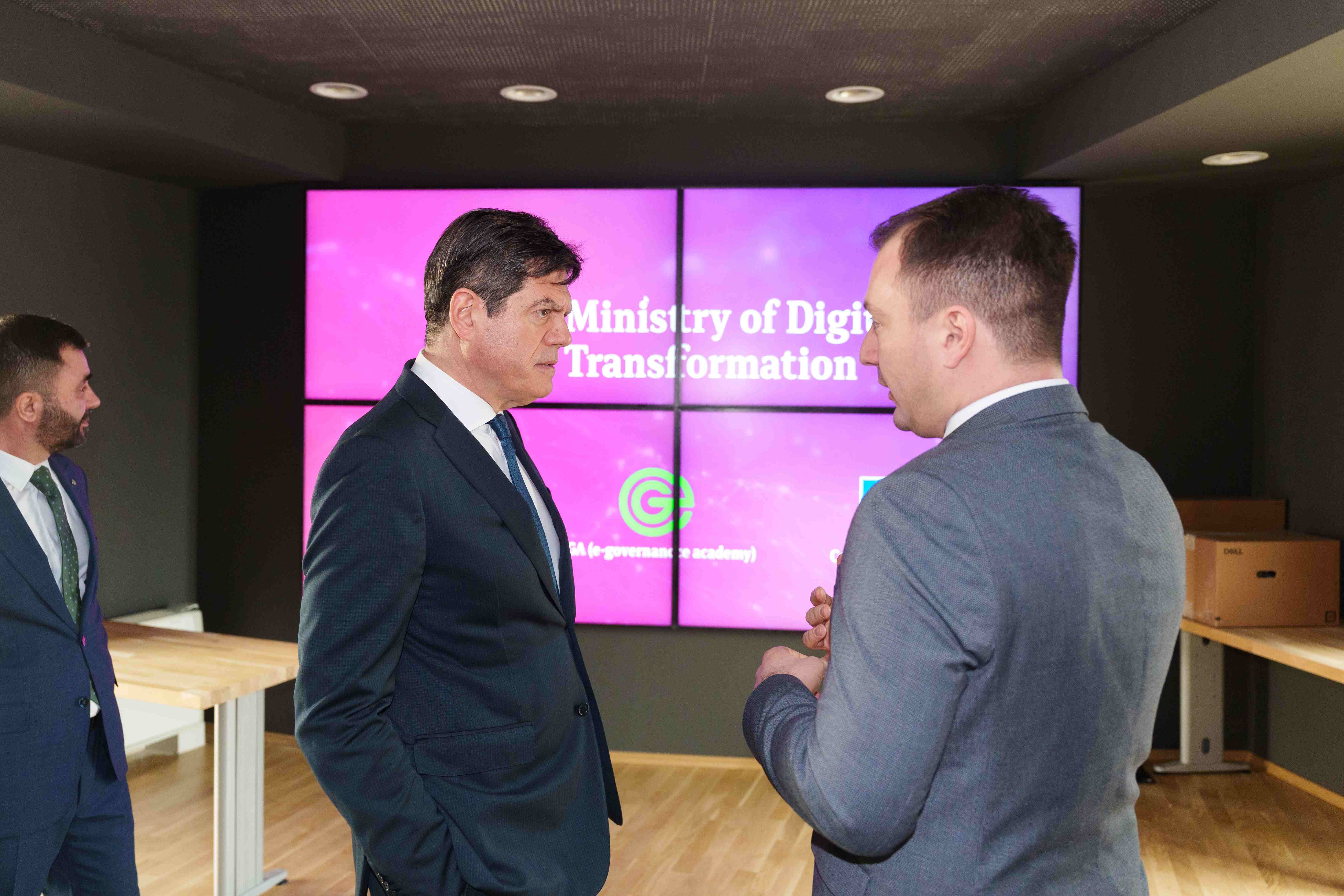

The Ministry of Digital Transformation has successfully completed the first phase of collaboration with the e-Governance Academy (EGA), as part of "EU Support to Western Balkans Cybersecurity Capacity Building" initiative, funded by the European Union.
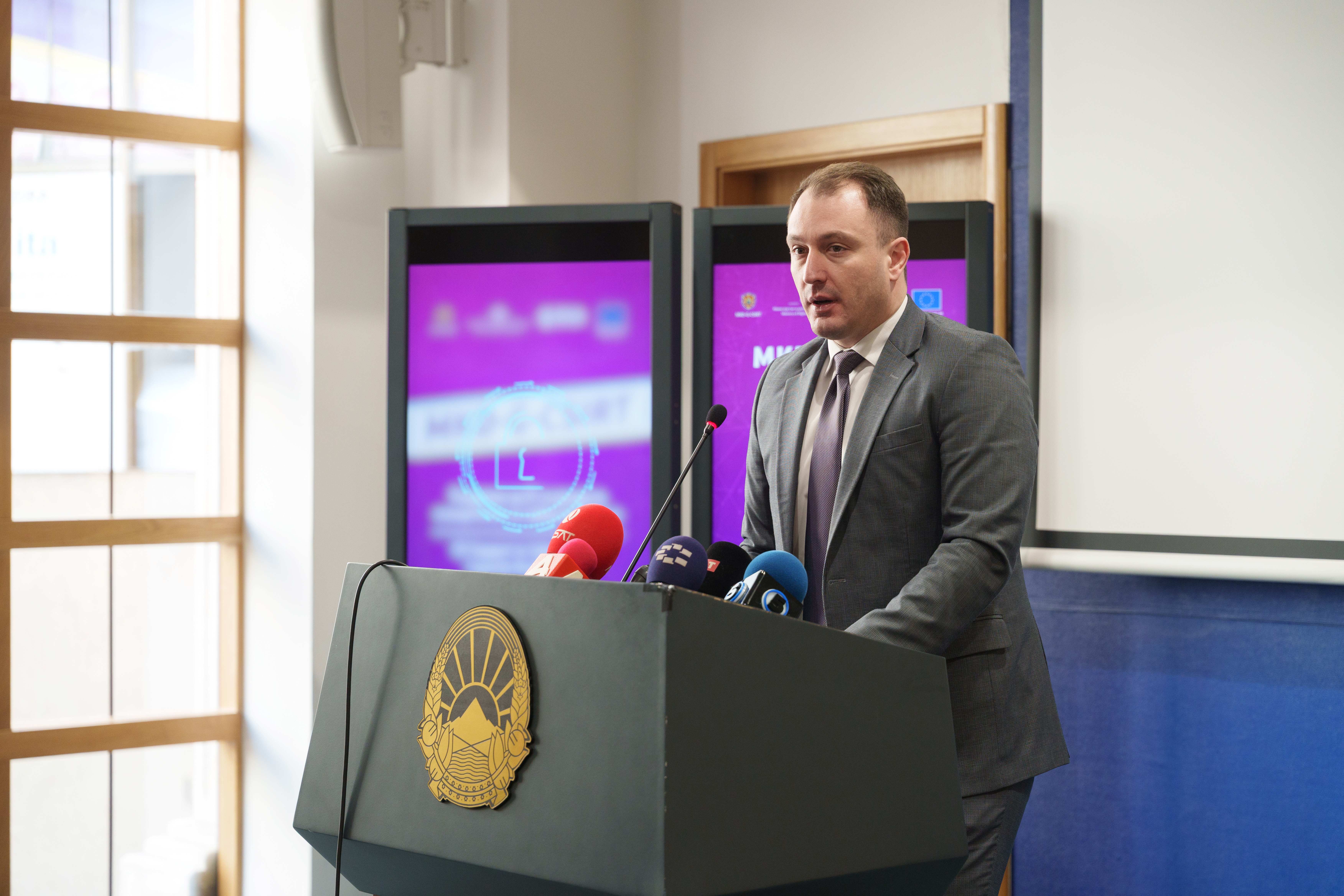
The Minister of Digital Transformation, Andonovski, in his address, emphasized that the project represents a strong example of how partnership with the EU brings concrete results for the country, by strengthening national capacities for cyber security and enhancing the resilience of institutions.
"As the final phase of the project was the donation of equipment worth of 149,921.20 euros, which strengthens the operational capacities of the GOV-CSIRT and improves the protection of state institutions and critical digital infrastructure. This means faster threats detection, more efficient incidents response and greater resilience to cyber-attacks. This donation complements the investments of the Ministry exceeding €1.5 million in the complete equipping of the Government CERT," stated Minister Andonovski.
The Minister expressed gratitude to the European Union for its continued support, as well as to the institutions and experts involved in the implementation of the activities, emphasizing that this model of cooperation is an example of an efficient international project aimed at real and measurable results.
Alongside with strengthening cybersecurity, the Ministry is also actively working on the "Roaming like at home" initiative, with the aim of allowing citizens and businesses from Macedonia to use mobile services in the EU at no additional cost.
"You know that in parallel with strengthening cybersecurity, we are also actively working on the "Roaming like at home" initiative, intending citizens and businesses from Macedonia to utilise mobile services in the EU at no additional cost. The information from the European Commission from yesterday shows that the process is alive and we are involved in its implementation. As a government, we have already established the text of the final Law for Alignment, with which, as we promised, will be among the first countries to fully comply with the requirements for Roaming like at home," the minister added.
As part of broader activities to strengthen cyber resilience, the three-year "Cyber Balkans" project, implemented by the Academy for e-Governance and funded by the European Union, officially ends in Macedonia this month, marking a significant step forward in strengthening the country's cyber resilience.
The project was aimed to advance cyber resilience in line with European best practices, focusing on aligning legislation, institutional capacity building, operational readiness and regional cooperation.
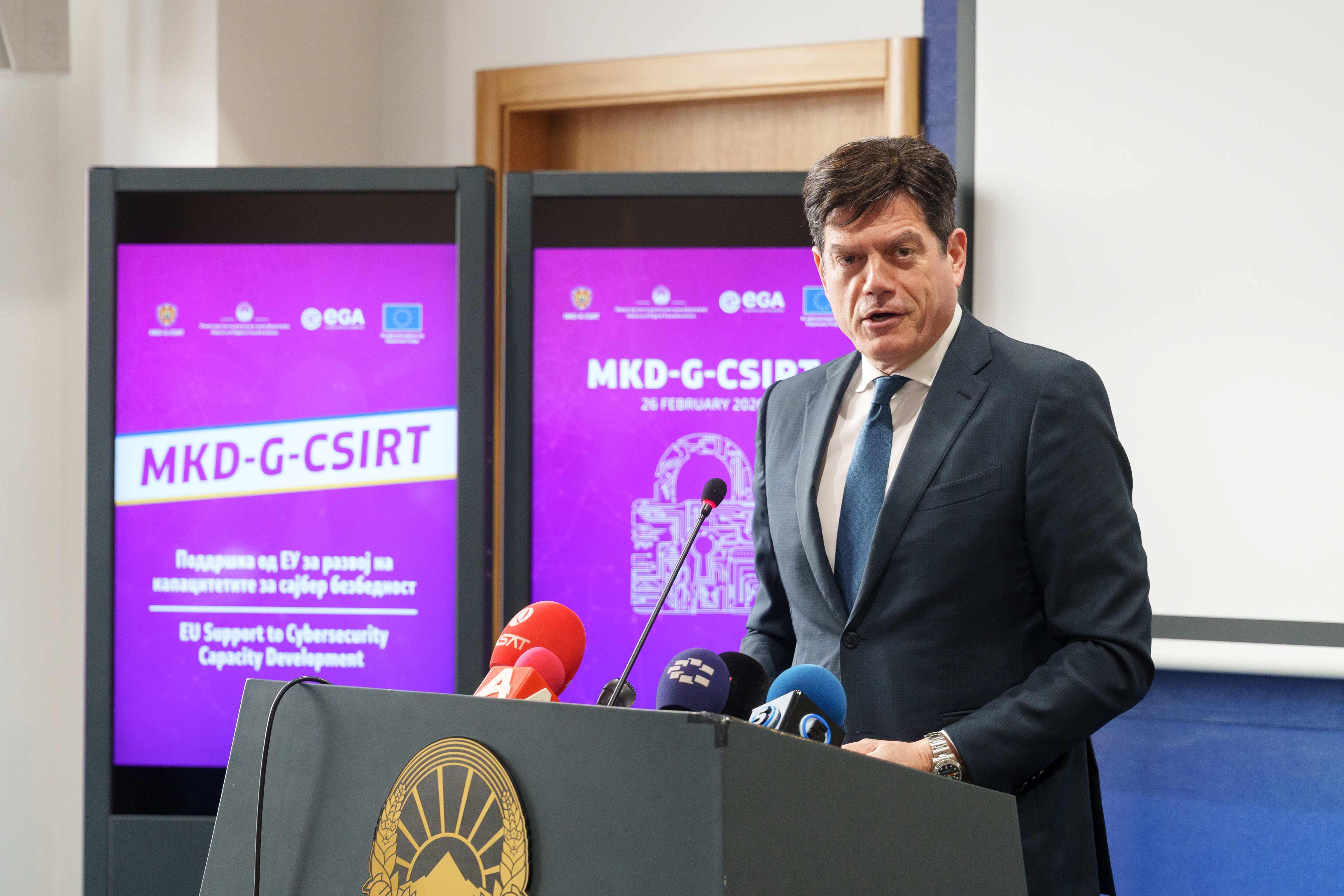
"The European Union remains committed to supporting North Macedonia and the Western Balkans in aligning with EU cybersecurity standards," said Michalis Rokas, Ambassador of the European Union to North Macedonia.
As part of the support, the project contributed to the establishment of a Government Security Operations Centre (GSOC) and a Computer Incident Response Team (CIRT), as well as the implementation of high-level tabletop exercises (TTX) to test governance models and incident coordination mechanisms. Additionally, a sustainable development plan for the GOV CIRT and equipment mapping were prepared, aimed at guiding future investments and ensure long-term development of capacity.
To strengthen the technical infrastructure and incident detection, the project also supported the procurement of necessary equipment for cybersecurity and network protection.
“Cyber resilience is not built overnight. It requires solid legal foundations, capable institutions and continuous regional cooperation,” stated Milan Sekuloski, Senior Expert at the Academy for e-Governance. “Over the past three years, we have closely collaborated with our partners in North Macedonia and across the Western Balkans to ensure that reforms are sustainable, aligned with EU standards and supported by real operational capacity. The achieved progress provides a strong basis for continued cooperation in the years to come.”
The Ministry of Digital Transformation remains committed to strengthening cybersecurity, modernizing digital infrastructure, and accelerating digital integration with the European Union, with a clear goal - a secure, connected, and European digital state.