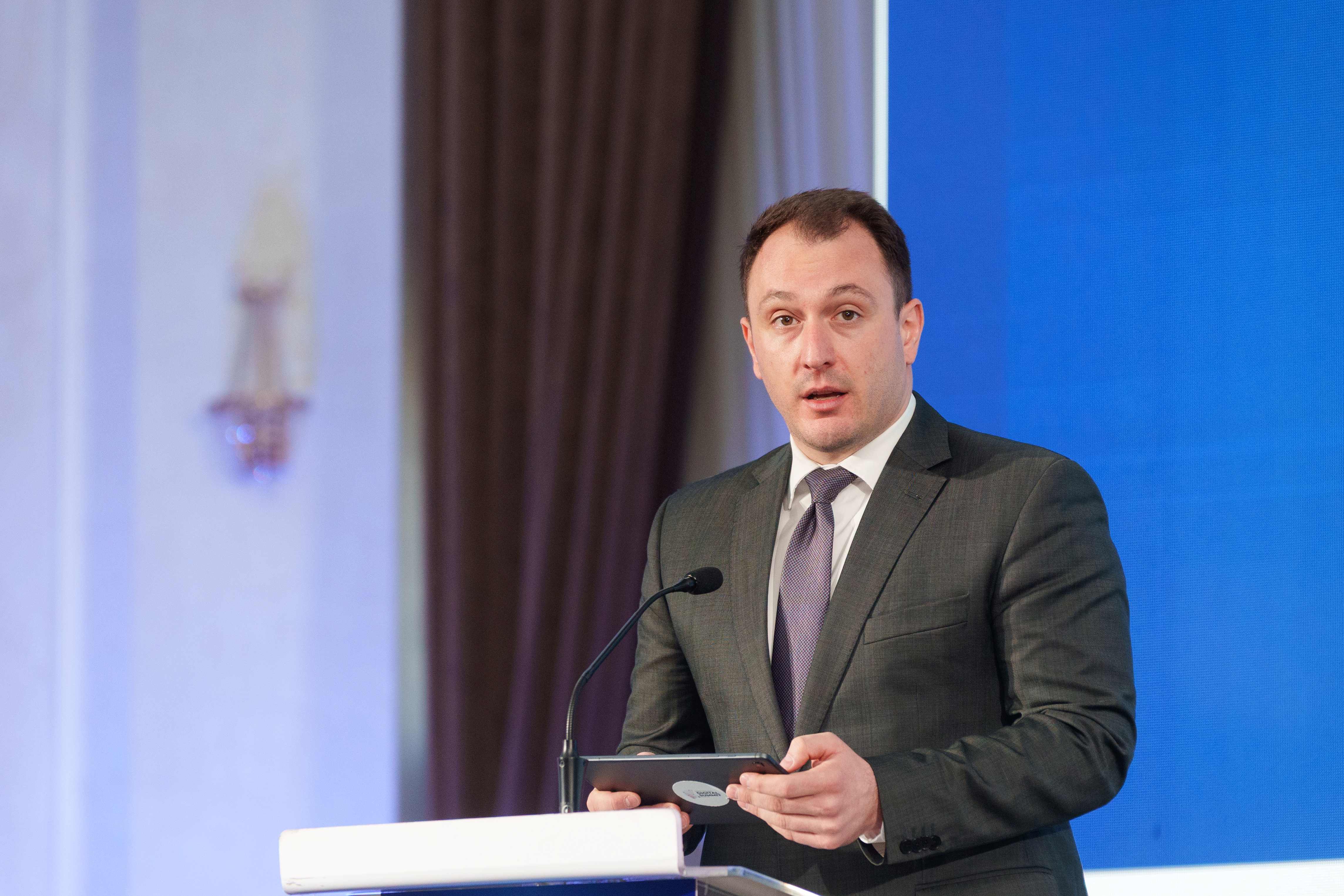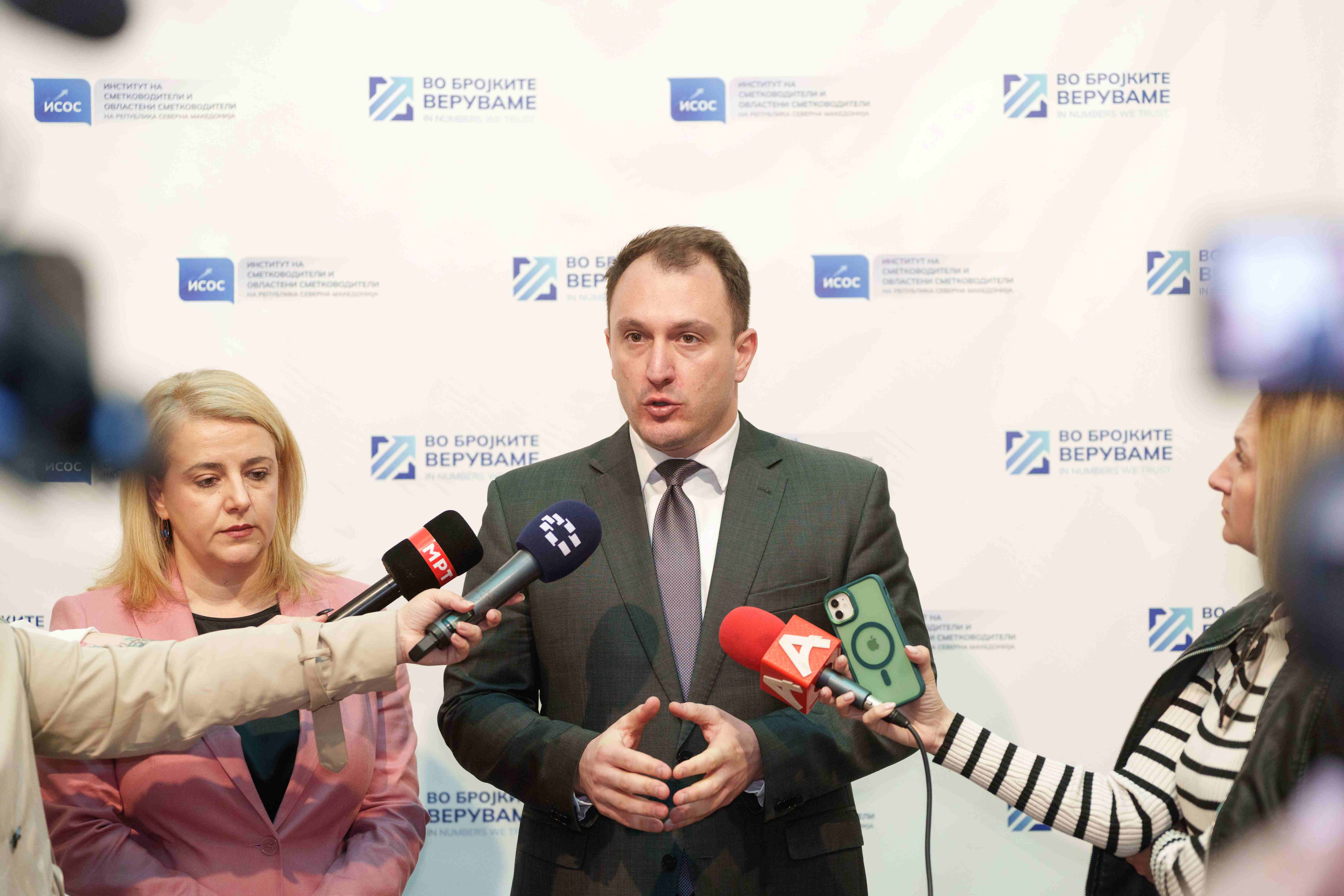

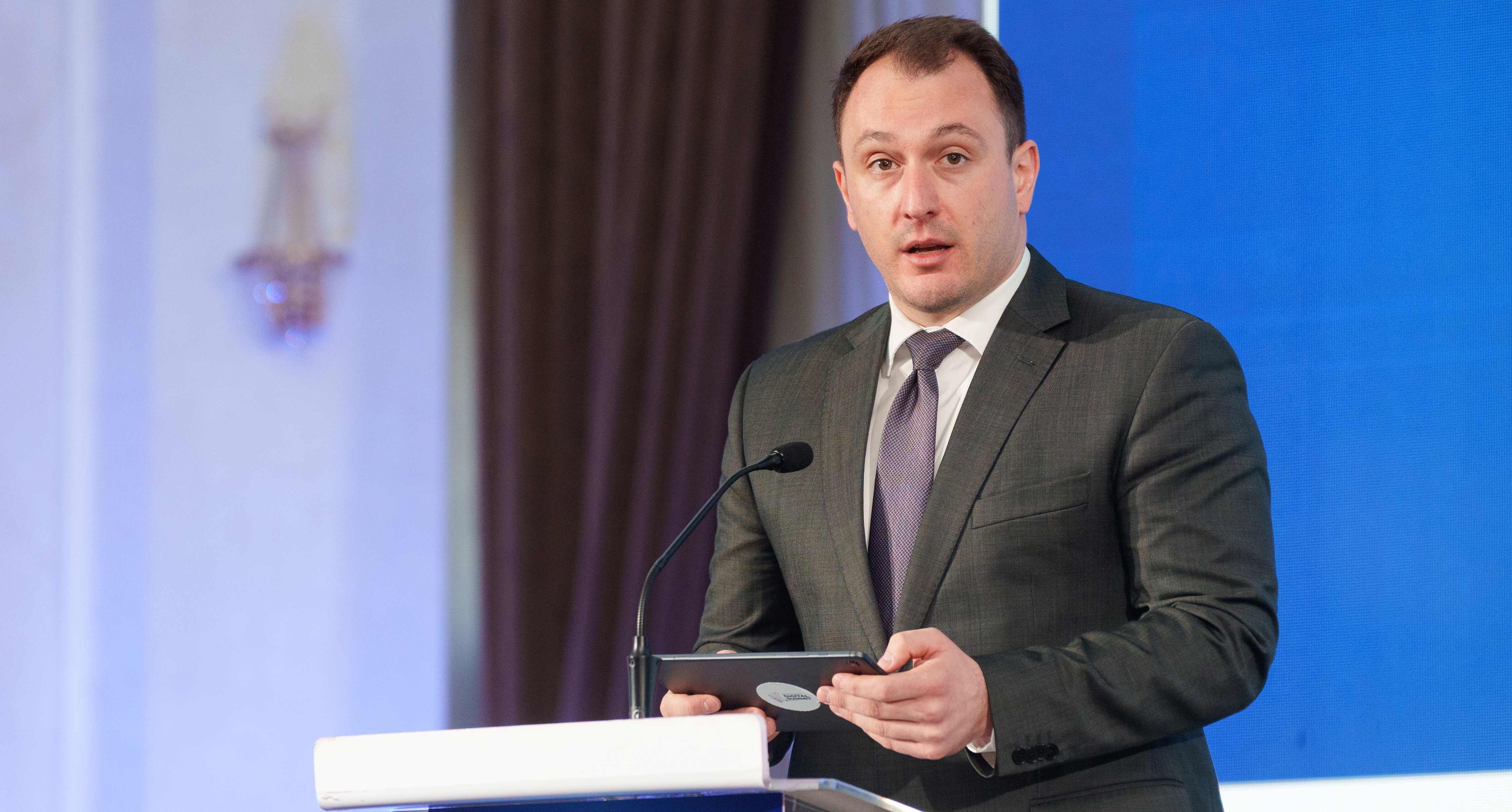
The Minister of Digital Transformation, Stefan Andonovski, today addressed the opening of the Third Regional Conference of Accountants and Certified Public Accountants, which is held under the organization of the Institute of Accountants and Certified Public Accountants, with the motto "Generation with Vision - Profession with a Future".
In his address, Minister Andonovski emphasized that digital transformation is not just a technological process, but a fundamental change in the way the state, business and citizens communicate with each other. He emphasized that the goal is less paper, fewer counters, less repetition of the same data and significantly less lost time for citizens and companies.
"For business, digital transformation means faster procedures, lower administrative costs, less uncertainty and more time for work, investment and development. Business should not be a courier among institutions. Data should move, not citizens and companies," stated Andonovski.
The minister pointed out that the interoperability platform is one of the key mechanisms through which institutions connect, their systems communicate with each other, and data that already exists in one institution can, in accordance with the law and with appropriate protection, be used by another institution.
In that context, Andonovski informed that about 120% surge in transactions on the interoperability platform has been recorded, which, according to him, displays that institutions are increasingly utilising digital channels for data exchange and that the system is gradually becoming a real support for more efficient administration.
“Interoperability is not merely a technical project. It is an economic measure, a mechanism for a better business climate and a way to help companies in becoming more productive, while making institutions quicker, more precise, and more accountable," emphasised Minister Andonovski.
He added that any reduction in the administrative burden directly facilitates the work of accountants and the companies they support, considering that their daily work is intertwined with deadlines, documents, reports, financial data, tax obligations, registration procedures and communication with multiple institutions.
A special emphasis in the address was also placed on the National Services Portal — uslugi.gov.mk, which, as Andonovski highlighted, should be a central point through which citizens and companies can more easily, quickly, and clearly access the services offered by institutions.
“The National Portal should not be just a digital service board. It should be a gateway to a different public administration — a user-oriented administration, towards simplification of procedures and towards real service,” Andonovski said.
The Minister welcomed the fact that ISOS, as a professional organization, is actively using the interoperability platform, as well as the services of the National Portal as a digital platform for accessing the services it offers to its members. He assessed that this is a positive example that should encourage other organisations and institutions to digitise their services and make them more accessible to users.
“Digitization has real value only when citizens and companies feel it in everyday life — when a service is completed more swiftly, when a document that already exists in another institution is not required and when the company can focus on growth, instead of bureaucratic labyrinths,” emphasized Andonovski.
Minister Andonovski stated that accountants play a crucial role in the process of digital transformation, as they are the ones who best understand where procedures are complex, where data is duplicated, and where digital solutions can provide the greatest benefit.
"Our goal is clear: digital services that truly work, institutions that exchange data with one another, procedures that are shorter and simpler, and a state that is a partner to business, rather than an obstacle to its operations," remarked the Minister for Digital Transformation.
Andonovski concluded that digital transformation is not an option, but a necessity, yet it must be smart, secure, inclusive, and focused on specific outcomes.
"We do not need digitisation that merely replicates bureaucracy in electronic form. We need digitisation that will reduce bureaucracy," emphasised Andonovski.