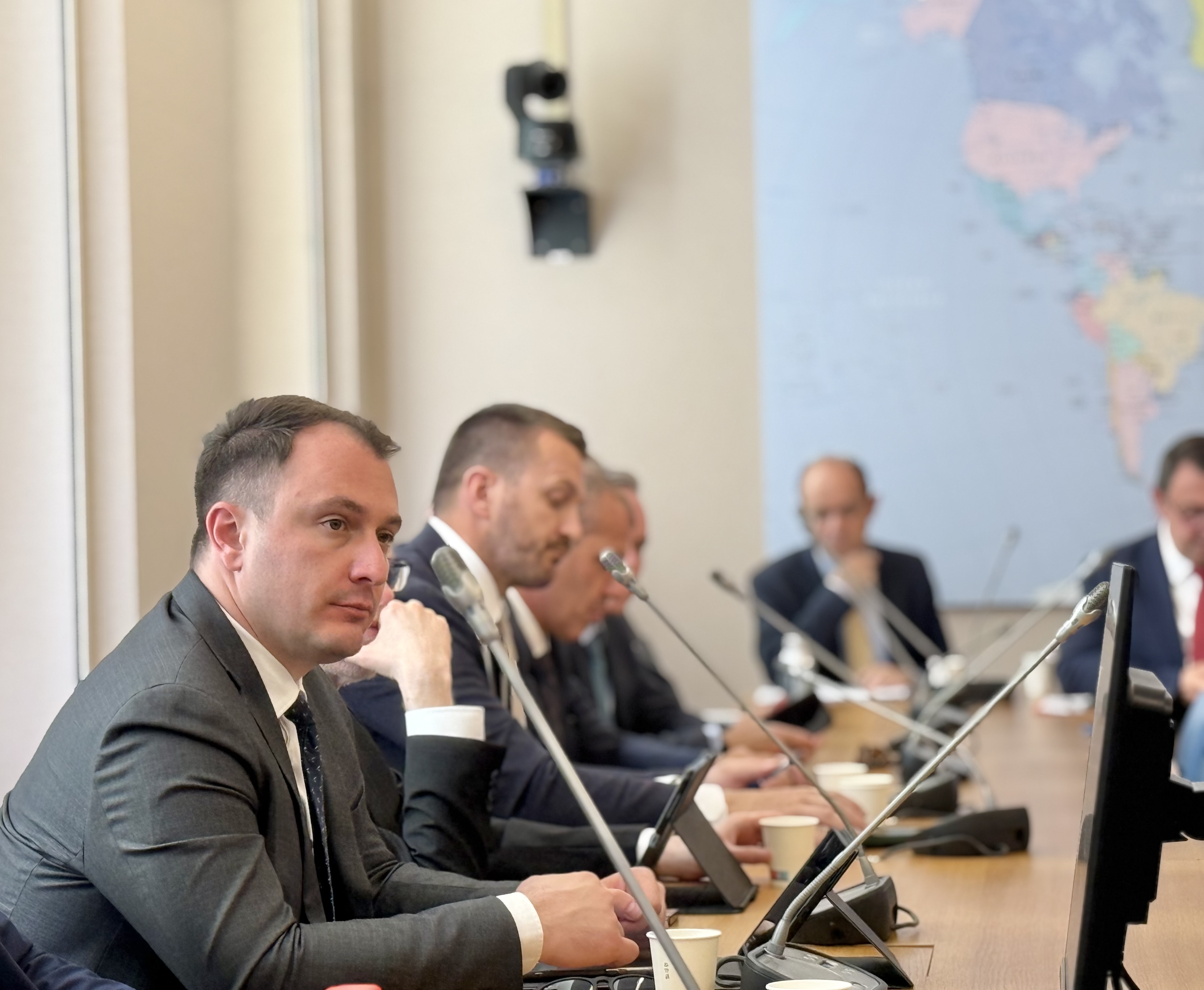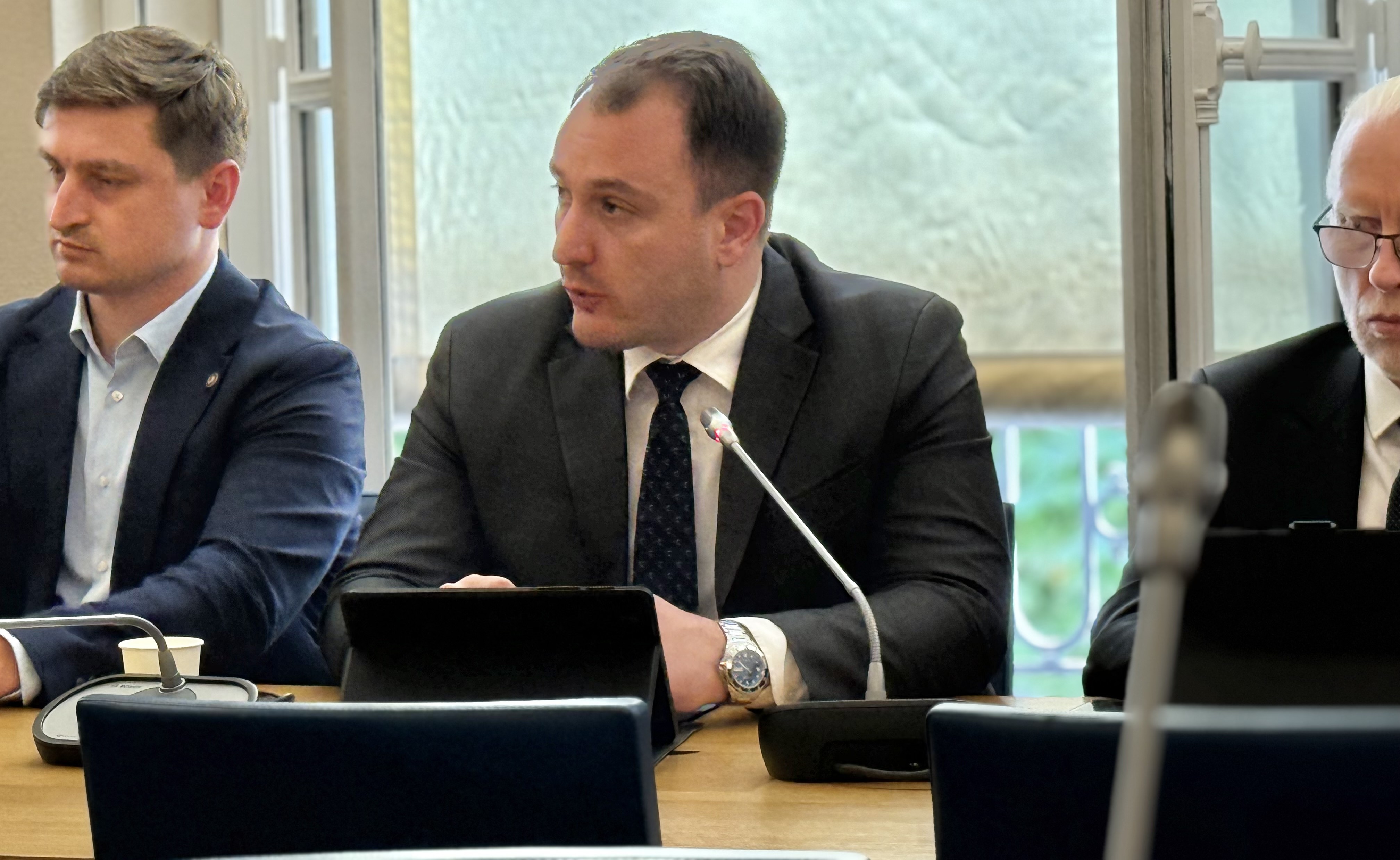

The Minister of Digital Transformation, Stefan Andonovski, today participated in a roundtable at the French Senate, as part of the Paris Cyber Summit 2026, dedicated to building cyber capacities in the Western Balkan countries amidst ongoing and complex threats.
The event, which took place at the Luxembourg Palace in Paris, brought together representatives of the countries of the region, French partners and representatives of the Western Balkans Cyber Capacity Centre – WB3C, with the aim of deepening the dialogue on cyber resilience, regional cooperation, interoperability and alignment with European and Euro-Atlantic security standards.
In his address, Minister Andonovski emphasized that cybersecurity today is not just a technical issue, but a matter of national resilience, democratic stability, protection of critical infrastructure and trust in the digital state.
"The Republic of N.Macedonia views cyber resilience as an integral part of European security and democratic resilience. As a NATO ally and a country with a clear Euro-Atlantic orientation, we approach cybersecurity through three parallel perspectives: security alignment with NATO, arrangement with the European acquis and the goals of the Digital Decade, as well as the necessity for strategic alignment to be transformed into real operational capacity," stressed Andonovski.
The Minister pointed out that N.Macedonia has made significant progress in legislative and institutional alignment over the past period, through the adoption of a new Law on Security of Networks and Information Systems in accordance with the principles of NIS2, the adoption of a National Cyber Security Strategy, strengthening institutional coordination and intensifying work on interoperability, secure digital services and digital public infrastructure.
Andonovski highlighted that N.Macedonia is investing significant funds in the construction of the Government Cyber Incident Response Centre MKD-GOV-CSIRT, protective systems, secure infrastructure and interconnectivity, with funds from the national budget and with support from strategic partners, including the United States of America.
The Minister also reflected on the increased complexity of threats, pointing out that cyber incidents are increasingly associated with hybrid pressure, disinformation, economic coercion and attacks on trust in institutions. He emphasised that critical infrastructure today encompasses not only energy and telecommunications but also public administration, healthcare systems, educational platforms, and digital public services.
“The threat is not only a disruption of systems, but a violation of trust — credebility in institutions, digital services and democratic processes,” said the Minister.
The discussion also highlighted the need for a stronger approach by the European Union towards financing cyber infrastructure in the region, especially within the framework of supporting instruments the Western Balkans. The Minister pointed out that cybersecurity should be clearly recognized as a priority area for investment, as the resilience of the region is directly linked to the resilience of the wider European digital space.
Special emphasis was placed on regional cooperation. Andonovski urged that cyber threats do not stop at borders and that smaller administrations cannot build resilience in isolation.
“For the Western Balkans, regional operational cooperation is not a luxury, but a multiplier of force. We need permanent trusted points of contact, regular joint cyber exercises, structured information exchange and stronger integration with EU and NATO mechanisms,” stressed the Minister.
He added that France, the European Union, NATO allies and transatlantic partners have a key role in building regional trust mechanisms, information sharing, training and joint exercises.
"The Western Balkans is already part of Europe's security architecture. The region cannot be treated only as a matter of future integration, but rather as a question of strategic foresight," stated Andonovski.
The roundtable at the French Senate was an opportunity to exchange experiences among the Western Balkan countries and European partners, with a focus on the practical strengthening of cyber capacities, protection against hybrid threats and the promotion of regional and European cooperation in the field of digital resilience.